



NTR2
NTR2 (Neurotensin Receptor 2, NTSR2) is a G protein-coupled receptor that mediates neurotensin-dependent neuropeptide signaling and participates in cell-surface receptor signaling pathways.[1] Mechanistically, NTR2 is linked to phosphatidylinositol-calcium second-messenger signaling, supporting its role in neuronal and peripheral physiological regulation.[1] Neurotensin signaling has been implicated in neurotransmission, stress-related responses, nociception, and neuropsychiatric processes, providing an important biological context for studies of NTR2 function.[3] In disease-associated models, altered NTR2 expression has been reported in chronic lymphocytic leukemia, prostate cancer, and other malignancies, indicating that dysregulated NTR2 signaling may contribute to tumor-related cellular phenotypes.[1] Compared with the closely related isoform NTR1, NTR2 exhibits lower affinity for neurotensin and distinct pharmacological properties despite substantial sequence homology between the receptors.[2][4] NTR2 is also selectively recognized by levocabastine, a characteristic frequently used to distinguish NTR2-mediated responses from NTR1-dependent signaling in experimental systems.[2][4] Furthermore, evidence suggests that NTR2 can regulate NTR1 activity through receptor cross-talk, resulting in intracellular sequestration and functional inhibition of NTR1 under specific conditions.[1] For experimental applications, selective ligands, including levocabastine-sensitive compounds and receptor-targeting pharmacological tools, are commonly employed to dissect NTR2-specific signaling mechanisms and receptor biology.[2]
References:
- [1]. NTR2 gene information from NCBI.
- [2]. Richard F, et al. Agonism, inverse agonism, and neutral antagonism at the constitutively active human neurotensin receptor 2. Mol Pharmacol. 2001 Dec;60(6):1392-8. [Content Brief]
- [3]. Kyriatzis G, et al. Neurotensin and Neurotensin Receptors in Stress-related Disorders: Pathophysiology & Novel Drug Targets. Curr Neuropharmacol. 2024;22(5):916-934.
- [4]. Labbé-Jullié C, et al. Mutagenesis and modeling of the neurotensin receptor NTR1. Identification of residues that are critical for binding and signaling. J Biol Chem. 1998;273(26):16351-16357.
All Product Categories
-
NTR2 Related Products (3)
Related Products (3)

-
Levocabastine hydrochloride
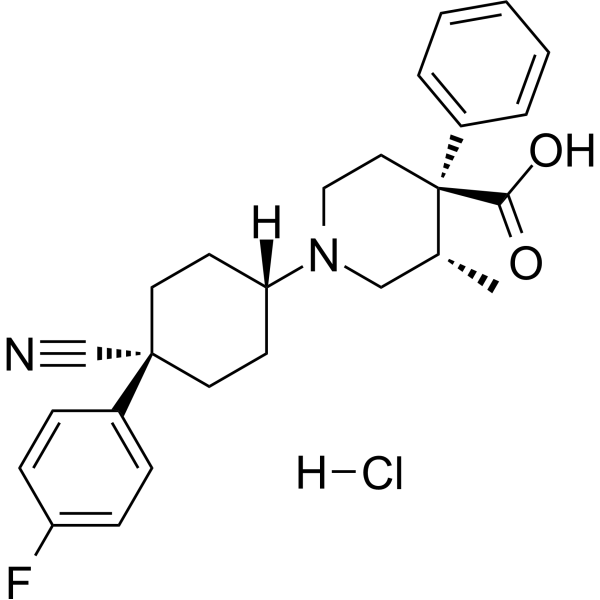 0 ImagesSynonyms: R 50547 hydrochlorideLevocabastine (R 50547) hydrochloride is a potent and selective histamine H1-receptor antagonist. Levocabastine hydrochloride is also a selective, high affinity neurotensin receptor subtype 2 (NTR2) antagonist, with a Ki of 17 nM for mNTR2. Levocabastine hydrochloride can act as a VLA-4 antagonist, interferes with conjunctival eosinophil infiltration in allergic conjunctivitis (AC).
-
NTRC-739
 0 ImagesNTRC-739 is a selective nonpeptide partial neurotensin receptor type 2 (NTS2) agonist with an EC50 of 12 nM and a Ki of 153 nM. NTRC-739 is 161-fold selective for NTS2 versus NTS1. NTRC-739 can be used for the study of chronic pain research.
-
(D-Tyr11)-Neurotensin
 0 ImagesCat. No.: HY-P0234ACAS No.: 64088-62-6(D-Tyr11)-Neurotensin is an agonist of neurotensin receptor (Neurotensin Receptor) and an inhibitor of glutamatergic neurotransmission. Activation of NTR1 in the VTA by (D-Tyr11)-Neurotensin enhances glutamatergic inputs to non-dopaminergic neurons, mediating reward and dopamine efflux; meanwhile, activation of NTR2 reduces glutamatergic excitatory postsynaptic currents (EPSC) in dopaminergic neurons. (D-Tyr11)-Neurotensin can be used in studies related to schizophrenia.



